91¹ú²ú͵ÅÄ

Fan Energy Index
  • The Fan Energy Index (FEI) is a powerful metric that helps specify and protect your design intent.
  • FEI allows you to accurately compare energy consumption between similar fan systems, identifying fans that operate more efficiently, quietly, and reliably.
  • To get the most out of FEI, design to the latest versions of ASHRAE 90.1 and IECC. Include and hold duty point FEI on your fan schedule.
  • Use to learn how FEI is calculated and its advantages in fan selection.

Advantages of Using FEI in Fan System Selection

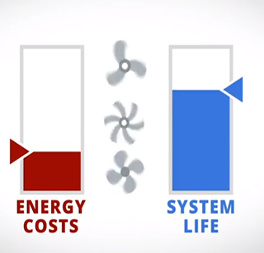
  • Higher FEI values equate to lower energy consumption, operating costs, and carbon emissions.
  • Higher FEI fans have a flexible operating range.
  • Higher FEI fans are usually quieter and more aerodynamically efficient.
  • Specified FEI values quickly highlight fans that may not meet your design intent during submittal review.

To protect your design using FEI, design to the latest versions of ASHRAE 90.1 and IECC.

TAG QTY TYPE MAKE & MODEL CFM "W.C. BHP SONES ELECTRICAL DATA FEI WEIGHT (LBS) NOTES
V/C/P HP
EF
1
1 D.D. UPBLAST CENTRIFUGAL GREENHECK CUE-240HP-VG 4,300 1.50 1.69 17.3 460/60/3 3 1.53 236 1, 2, 3
EF
2
1 INLINE CENTRIFUGAL GREENHECK SQ-15-M2-VG 3,600 1.25 1.44 15.5 460/60/3 2 1.47 119 1, 3
EF
3
2 D.D. CENTRIFUGAL GREENHECK G-140-VG 2,000 1.25 0.81 15.2 460/60/3 1 1.38 69 1, 2, 3
EF
4
1 D.D. CENTRIFUGAL GREENHECK G-130-VG 1,700 1.00 0.48 13.9 208/60/1 1/2 - 53 1, 2

NOTES:

  1. MOTORS SHALL BE HIGH EFFICIENCY EC TYPE
  2. PROVIDE WITH 12" HIGH ROOF CURB
  3. FANS SHALL MEET OR EXCEED SCHEDULED FEI VALUE AND BE LICENSED TO BEAR THE AMCA CRP SEAL FOR FEI
 
Comprehensive Energy Metric

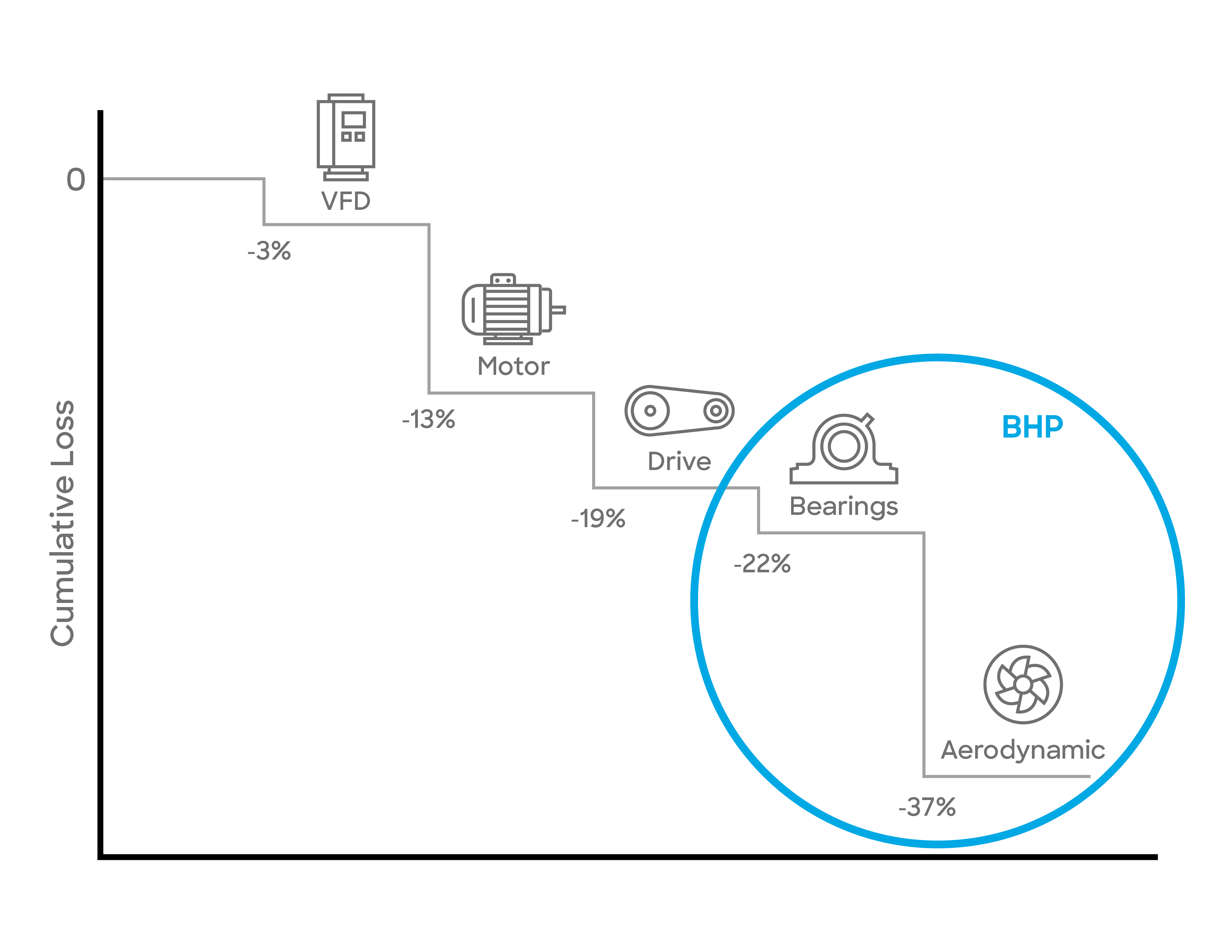
FEI is a comprehensive energy metric that goes beyond brake horsepower to include the impact of all components in the fan system including the aerodynamics, motors, VFD, drives, and bearings. Brake horsepower only considers the bearing and aerodynamic losses and ignores the rest of the fan system. 

FEI Staircase Graphic

How is FEI Calculated?

FEI is the ratio of the Reference Electrical Input Power of a conceptual fan to the Actual Electrical Input Power of a fan system at the same duty point.

The Reference Electrical Input Power is derived from fan data submitted by AMCA manufacturers and is intended to represent the typical power used at a specific duty point. The Actual Electrical Input Power is the power required to operate the actual fan system you are considering at the same duty point.

FEI >1.00 indicates your fan system uses less energy than the reference fan, while FEI <1.00 indicates it uses more energy than the reference fan.


If you want to dive deeper into the calculations behind FEI, read our .


Or let 91¹ú²ú͵ÅÄ’s eCAPS® selection software do the work for you. Click  to access eCAPS and start selecting fans using FEI.

Select the Best Fan System

FEI values help ensure your design intent is specified properly by indicating fan systems with better sound performance, more flexible operating ranges, and more.


Energy Efficiency

Higher FEI values equate to lower energy consumption, operating costs, and carbon emissions. For example, a fan system with an FEI value of 2.00 will use approximately 25% less energy than a comparable fan system with an FEI value of 1.50.


Flexible Operating Range

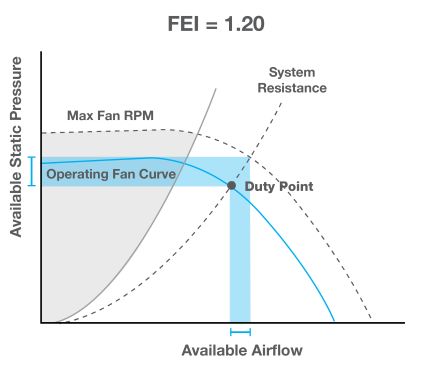
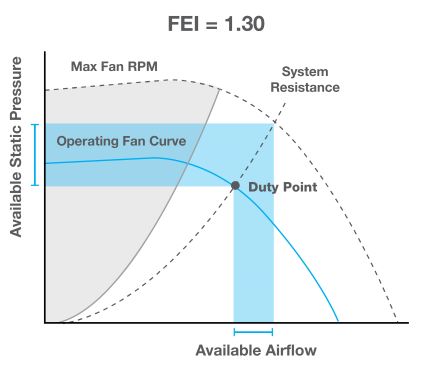
Selecting a fan with higher FEI means that you are relatively more central in the fan curve, which allows you more adjustment in the field if the installed duct system is different from your design intent.


FEI Fan Curve 1.20FEI Fan Curve 1.30


Quieter Operation

Fans with lower FEI values tend to be operating at higher speeds or may be using less efficient rotors, both of which can create more sound power. By optimizing FEI, you are selecting a fan system with a more efficient rotor or a larger fan that is operating at slower speeds, both of which improve sound performance.


Submittal Review

Even a small difference in FEI can indicate a significant difference between comparable fans. If you notice even a slight FEI difference during submittal review, check further.

•Do the fan size and type match your design intent?

•Are there differences in motor type, drive type, or impeller type?

•Are fan controls like VFDs being included?

•Did the sound and/or speed go up?


If you compromise on FEI, there will be tradeoffs. Use the FEI value to protect your design intent by including and holding FEI on your fan schedule.

Codes and Compliance

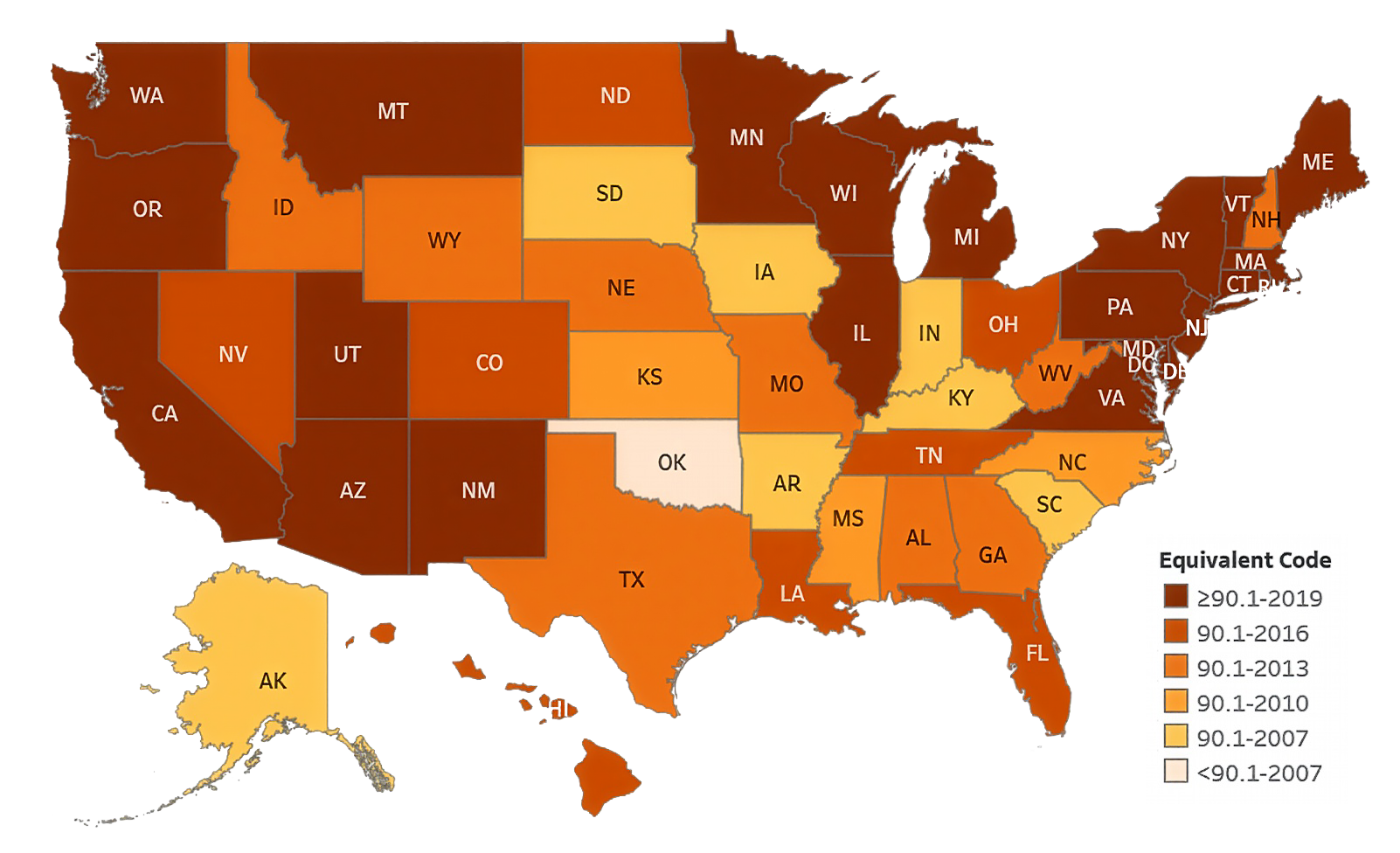
Minimum FEI requirements are now included in the current ASHRAE 90.1 standard and International Energy Conservation Code (IECC). It is now up to states or local municipalities to incorporate these into their building codes. Many states have incorporated the current 90.1 standard into their code, thereby setting minimum FEI values. Some states lack a state-level code but are seeing adoption at the municipal level. Navigating the complex landscape makes understanding how to comply with FEI codes and regulations difficult.

To stay ahead of these ever-changing codes, design to the latest versions of ASHRAE 90.1 and IECC and include and hold duty point FEI on your fan schedule.


Adoption at State Level

Currently, 23 states or jurisdictions meet the energy efficiencies established by the ASHRAE 90.1 2019 standard and have adopted it into their codes.

FEI Adoption at State Level 2026

Source:

FAQ

Learn in Person

Reach out to your local 91¹ú²ú͵ÅÄ representative to arrange training on protecting your design intent using FEI at a convenient location for you.

Find My Rep